
The South American Highway Environment Is Harsher Than Most Specs Assume
Latin America's infrastructure boom is real. Brazil's Programa Caminhos do Desenvolvimento, Peru's portfolio of interoceanic highway improvements, Colombia's 4G toll road concessions, and Chile's longitudinal coastal route upgrades are all generating sustained demand for safety-critical road barriers. But the material conditions in much of the region are genuinely demanding — and the way most procurement specs are written doesn't reflect that.
The dominant challenge is moisture. From the Amazon-adjacent corridors of northern Brazil to the Pacific coastal zones of Peru and Chile, high humidity and salt-spray exposure attack guardrail systems relentlessly. Conventional hot-dip galvanizing (HDG) handles this adequately for the first few years. But the lifecycle math in these environments is where HDG systems show their structural weakness — and where better material choices pay off from the first day of operation.
If you're working on coastal projects in Southeast Asia, the corrosion dynamics are strikingly similar — high humidity, monsoon seasons, and year-round salt exposure create the same pressures. And for AfDB-funded projects in Africa, the lifecycle cost case for high-performance coatings follows the same logic, supported by multilateral development bank value-for-money procurement frameworks.
What ABNT Actually Requires (and What It Doesn't)
The Brazilian standard ABNT NBR 15440 governs highway guardrails and road safety barriers, aligned broadly with EN 1317 performance classes. It specifies impact absorption levels (N2, H1, H2) and structural requirements, but critically — it does not mandate a specific coating system. That's a procurement decision.
This creates a gap: engineers writing specs tend to fall back on HDG as the default, even though the standard allows alternatives that perform significantly better in high-humidity conditions. The same pattern holds across Peru (MTC standards), Colombia (Ministerio de Transporte specifications), and Chile (MOP standards) — the functional performance requirements are clear, but coating specification is left open.
The Two-Pathway Cost Argument That Procurement Teams Need to Understand
There's a common assumption in South American procurement that better corrosion protection costs more upfront. That assumption usually comes from comparing coating price-per-kilogram rather than total installed material cost. The reality is more nuanced.
Pathway 1: High-tensile strength steel reduces tonnage
Switching from conventional Q235/Q345 steel to high-tensile strength grades (550 MPa+ yield strength) allows thinner structural sections to achieve equivalent or better impact performance. The result is measurably less steel tonnage per kilometer. High-tensile grades carry a higher per-ton price, but the reduced quantity partially or fully offsets that premium.
Pathway 2: ZAM coating requires less material per unit area
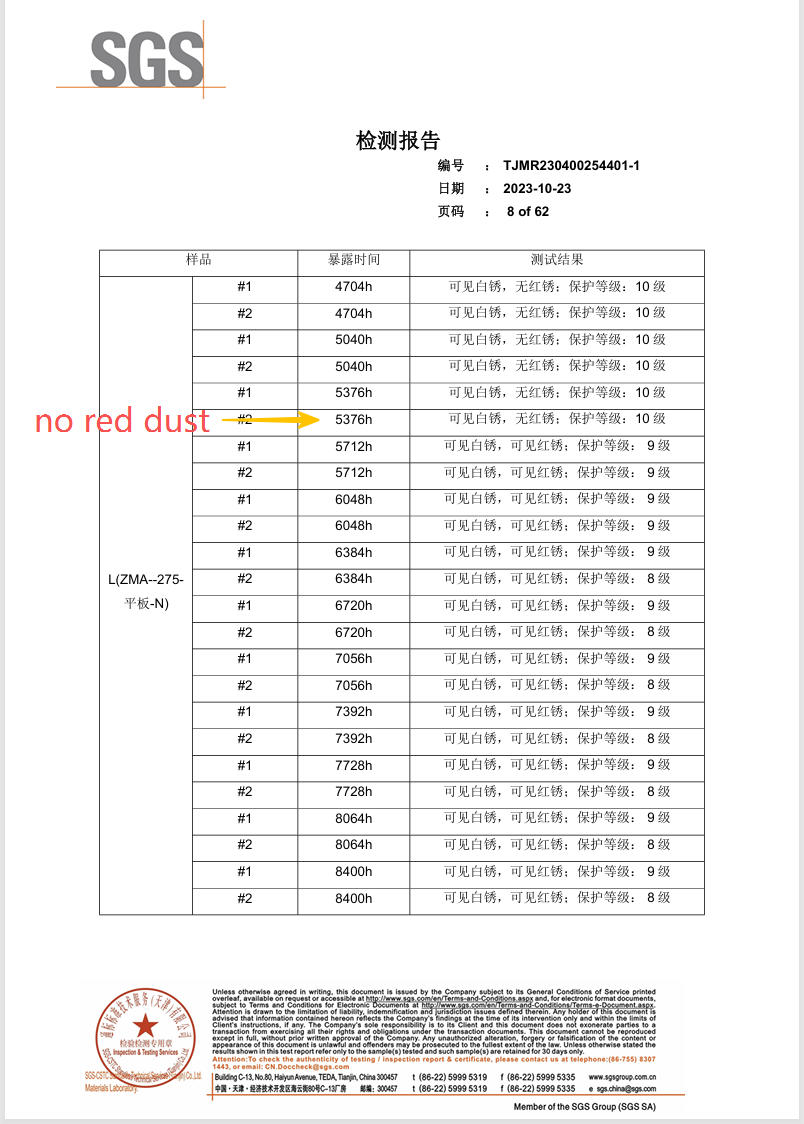
Zinc-aluminum-magnesium (ZAM) coating achieves superior corrosion resistance at significantly lower coating weights than HDG. In neutral salt spray testing, ZAM reaches 1,500-3,000+ hours to red rust at coating weights of approximately 90-180 g/m² on both sides. HDG requires 600-900 g/m² to reach its own performance ceiling — and even then, HDG falls short in coastal and high-humidity conditions.
Less coating weight per square meter means less total coating material cost, even though ZAM commands a per-kg premium over commodity HDG steel.
Combined: the upfront cost picture often looks better than expected
When you add reduced steel tonnage (from high-tensile substrate) and reduced coating material (from ZAM efficiency), the total installed material cost for a high-tensile/ZAM guardrail system frequently lands neutral to favorable compared to conventional HDG on a per-project basis — before you even account for lifecycle maintenance savings.
Real-World Lifecycle Comparison for Coastal Routes
| Factor | HDG (Q235/Q345) | High-Tensile + ZAM |
|---|---|---|
| Typical salt spray performance | 500-1,000 hrs to red rust | 1,500-3,000+ hrs to red rust |
| Maintenance-free service life (coastal) | 10-15 years | 25-30 years |
| Expected repaint cycles over 25 years | 1-2 cycles | 0 |
| Traffic management cost per repaint | Significant | None |
| Upfront material cost delta | Baseline | Neutral to 5-8% lower in many cases |
Logistics Considerations for South American Import
Chinese steel products — including guardrail systems — reach South American ports efficiently via Pacific and Atlantic routes. Major destination ports include:
- Santos, Paranagua, Navegantes (Brazil Atlantic coast) — Primary entry for Brazilian highway and solar projects
- Callao, Pisco (Peru Pacific coast) — Serving Andean corridor and coastal highway projects
- San Antonio, Valparaiso (Chile Pacific coast) — Northern and central Chile route access
- Cartagena, Buenaventura (Colombia Caribbean/Pacific coast) — 4G concession corridor supply
Containerized and breakbulk shipment is standard for guardrail orders of 200+ tons, with lead times of 3-5 weeks from Chinese ports to major South American destinations. Export packaging should specify marine-grade moisture protection — something reputable suppliers handle as standard for ocean freight.
For projects that span multiple regions — say, AfDB-funded infrastructure in coastal Africa alongside Latin American highway corridors — a single Chinese supplier with ZAM-coated stock can often serve both geographies from the same mill batch, simplifying procurement and reducing per-unit cost.
What to Require in Your Procurement Specification
When inviting bids for guardrail supply on South American highway projects, make sure the following are explicitly required:
- Mill certificate for steel substrate — naming the mill and grade, not just "meets spec"
- Coating specification — type, weight (g/m² both sides), and applicable test standard
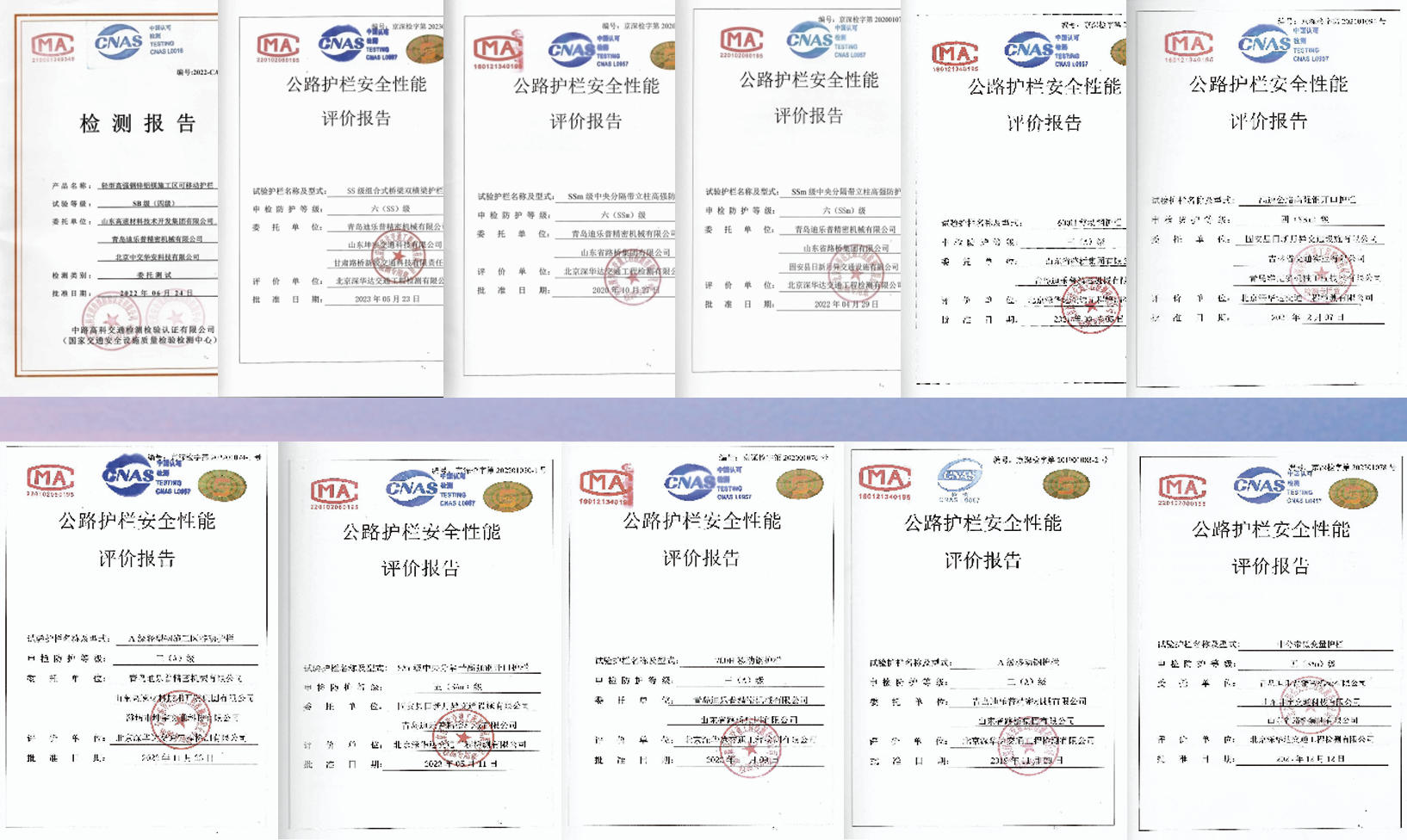
- Salt spray test report from a recognized third-party lab
- Production capacity confirmation — tonnage/month capability vs. project tonnage and timeline
- Reference projects in comparable climate conditions
The Competitive Dynamic in South American Procurement
South American highway agencies and EPC contractors are increasingly aware of lifecycle cost differences between guardrail systems. Brazilian DNIT (Departamento Nacional de Infraestrutura de Transportes) has been receptive to performance-based specifications that evaluate total cost over project life rather than first-cost alone. Peru's Provias Nacional and Chile's MOP are following similar trajectories.
For international suppliers, the opportunity is clear: projects in humid coastal zones, equatorial corridors, and tropical mountain passes represent genuine use cases where ZAM high-tensile systems outperform conventional HDG — and where the upfront cost story is increasingly favorable as well.
Buyers in Africa face comparable coastal and humid-environment corrosion challenges — the case for ZAM systems on West African coastal corridors follows the same material logic as ABNT-compliant South American projects, with the additional support of AfDB lifecycle cost evaluation frameworks.
"The assumption that better guardrail material costs more is usually based on the wrong unit of comparison. For coastal South American projects, the full-system upfront cost often tells a different story."