
Why Southeast Asia's Climate Demands Better Than Default Specifications
Southeast Asia is one of the world's most active infrastructure markets. Vietnam's North-South Expressway network, the Philippines' ‘Build, Build, Build' highway expansion, Indonesia's Trans-Sumatra and Java toll roads, Thailand's Eastern Economic Corridor, and Malaysia's coastal highway programs are all creating sustained demand for road safety barriers and solar mounting systems.
What ties all of these markets together is the climate: high temperatures year-round, extreme humidity, monsoon seasons with concentrated rainfall, and coastal salt exposure across most of the region's major project corridors. These conditions create serious corrosion pressure on steel infrastructure — and conventional hot-dip galvanizing was designed for a different set of operating conditions.
The good news: material science has moved forward. ZAM-coated high-tensile steel doesn't just perform better in these conditions — for many Southeast Asian projects, it actually costs less from the first day of installation.
The Two-Pathway Cost Advantage for Southeast Asian Projects
Pathway 1: High-tensile steel means less steel tonnage
High-yield-strength steel (550 MPa+ yield strength) allows guardrail profiles and solar mounting structures to use thinner sections without sacrificing structural or impact performance. For large highway or solar projects — where you're ordering hundreds or thousands of tons — the cumulative tonnage reduction is meaningful. A 10-15% reduction in steel mass on a 1,000-ton project translates directly to lower total steel cost, partially or fully offsetting the per-ton premium of high-strength grades.
Pathway 2: ZAM coating requires less coating material per square meter
This is the counterintuitive part that changes the cost comparison entirely. ZAM coating achieves equivalent or better corrosion protection than hot-dip galvanizing at significantly lower coating weights:
- HDG: 600-900 g/m² coating weight on both sides for adequate coastal/monsoon performance
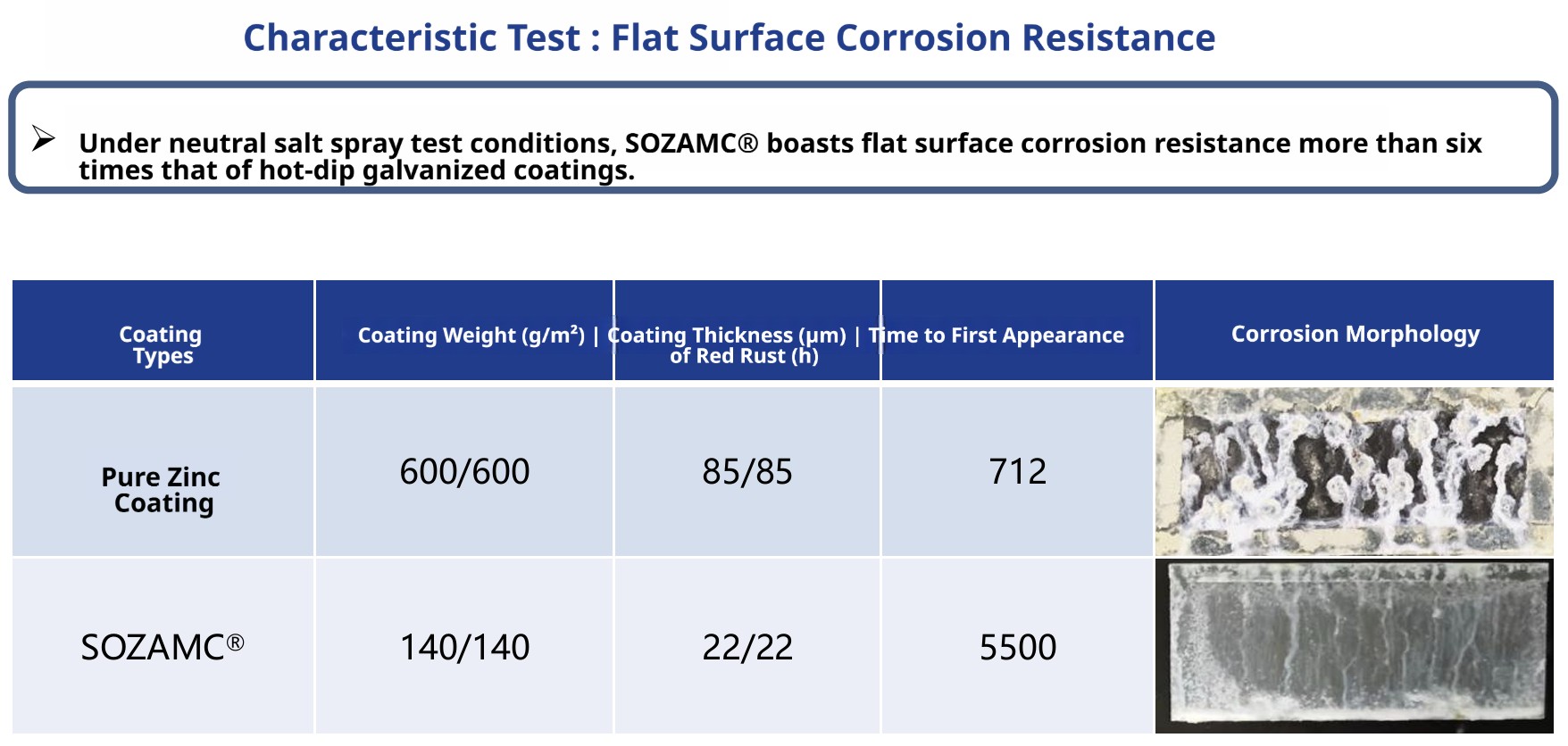
- ZAM: 90-180 g/m² coating weight — thinner coating, better protection
ZAM's aluminum and magnesium components are far more efficient at corrosion protection at the molecular level, so less coating material achieves better results. The per-kilogram cost of ZAM compound is higher than HDG zinc, but because the required coating is dramatically thinner, the total coating material cost per square meter often comes in comparable to or lower than HDG.
Climate Zones Across Southeast Asia and What They Mean for Material Choice
Vietnam: Coastal highways and Red River Delta
Vietnam's coastline stretches over 3,000 km. Highway projects along the central coast (Da Nang, Nha Trang corridor) and the southern Mekong Delta approaches face continuous salt-spray exposure. HDG systems in these zones typically show first meaningful surface degradation within 8-12 years. The monsoon season (July-November) concentrates rainfall and humidity into an aggressive cycle that accelerates coating breakdown.
Philippines: Island coastal and typhoon zones
The Philippines adds a second challenge on top of coastal corrosion: typhoon wind loads. Guardrail and solar mounting systems must handle both salt-spray corrosion and significant dynamic wind loading. High-tensile strength steel mounting systems provide better strength-to-weight ratios, which matters for solar structures in typhoon-prone zones. ZAM coating handles the corrosion; the steel grade handles the structural demand.
Indonesia and Malaysia: Extended coastline, equatorial humidity
Indonesia's coastal highways and the Malaysian Penang-Langkawi corridor face year-round humidity with minimal seasonal variation. There is no "dry season" reprieve for steel infrastructure in these zones. HDG coating systems degrade continuously in this environment. ZAM's self-healing edge protection — where magnesium in the coating reacts with moisture to form protective compounds at cut edges and scratches — is particularly valuable during construction, when guardrail sections are field-cut to fit.
Thailand: Gulf coast and industrial zones
Thailand's Eastern Economic Corridor and southern Gulf coastal routes add industrial pollution to the corrosion equation. Acidic atmospheric conditions from industrial activity accelerate zinc coating degradation. ZAM's aluminum oxide layer provides better resistance to acidic atmospheric conditions than pure zinc, making it a natural choice for projects in industrial coastal zones.
For multinational infrastructure developers operating across both regions, Gulf coastal solar projects and Southeast Asian coastal solar installations can often be served from the same ZAM-coated product specification — the coating and steel grade requirements are effectively identical, simplifying supplier qualification and procurement across the portfolio.
Solar Mounting Systems: Where Southeast Asia's Climate Hits Hardest
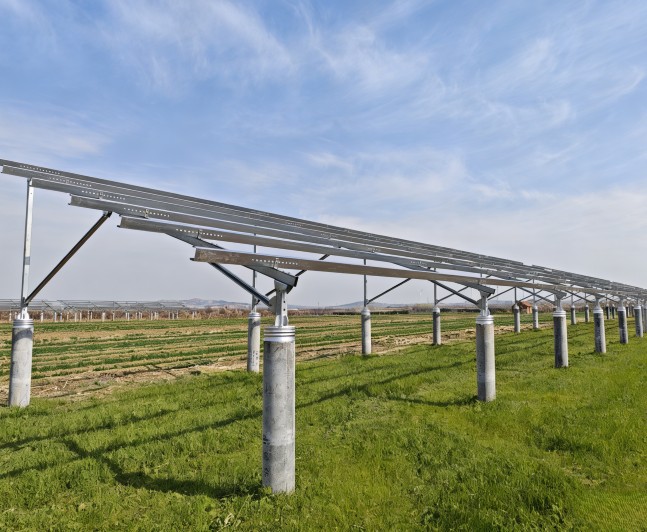
Ground-mounted solar in Southeast Asia faces a triple climate challenge: high humidity, salt spray in coastal installations, and intense UV exposure year-round. Utility-scale solar projects in Vietnam's southern provinces, the Philippines' Luzon grid, and Malaysia's Perak solar corridors are all in these conditions.
HDG galvanized steel mounting systems in these environments typically show structural coating degradation within 10-15 years. For a 25-year power purchase agreement (PPA), that means unplanned maintenance — track, jack, re-galvanize or replace — during the operational period. That's a meaningful OPEX hit for a solar EPC or IPP that isn't always priced into the original bid.
The same 25-year PPA structure applies to utility-scale solar projects across the Gulf region, where extreme heat and coastal salt spray create equally demanding conditions for mounting system durability — and where ZAM-coated systems offer the same lifecycle advantage of 25-30 years maintenance-free versus 10-15 years for HDG.
ZAM-coated high-strength steel mounting systems operate maintenance-free for 25-30 years in equivalent conditions, matching or exceeding the PPA term. The upfront material cost comparison typically comes out comparable to HDG once you account for the tonnage reduction from high-tensile steel and the thinner ZAM coating weight.
Logistics: Getting Material to Southeast Asian Projects
Key ports for steel delivery to Southeast Asian projects:
- Ho Chi Minh City (Cat Lai), Hai Phong (Vietnam) — Northern and southern Vietnam access
- Manila (MICT), Subic Bay (Philippines) — Luzon corridor and northern Philippines
- Surabaya, Jakarta, Belawan (Indonesia) — Java, Sumatra, and Kalimantan access
- Port Klang, Penang (Malaysia) — West coast corridor and northern zone
- Laem Chabang (Thailand) — Eastern Economic Corridor and southern access
Shipping time from Chinese ports (Qingdao, Tianjin) to Southeast Asian destinations runs 7-14 days — one of the shortest transit times from Chinese manufacturing bases to any major market globally. This gives suppliers flexibility on production scheduling and reduces ocean freight costs compared to longer routes.
What Your Specification Should Require
| Specification Item | Detail Required |
|---|---|
| Steel grade and mill name | Named mill, not "meets grade" — e.g., Shougang S550HLD or equivalent |
| Coating system | ZAM coating, coating weight specified in g/m² both sides |
| Corrosion test data | Neutral salt spray test (ISO 9227) hours to red rust from third-party lab |
| Wind load certification (solar) | Structural certification for applicable wind speed zones (typically ASCE 7 or equivalent) |
| Production schedule | Tonnage/month capability confirmed against project delivery timeline |